
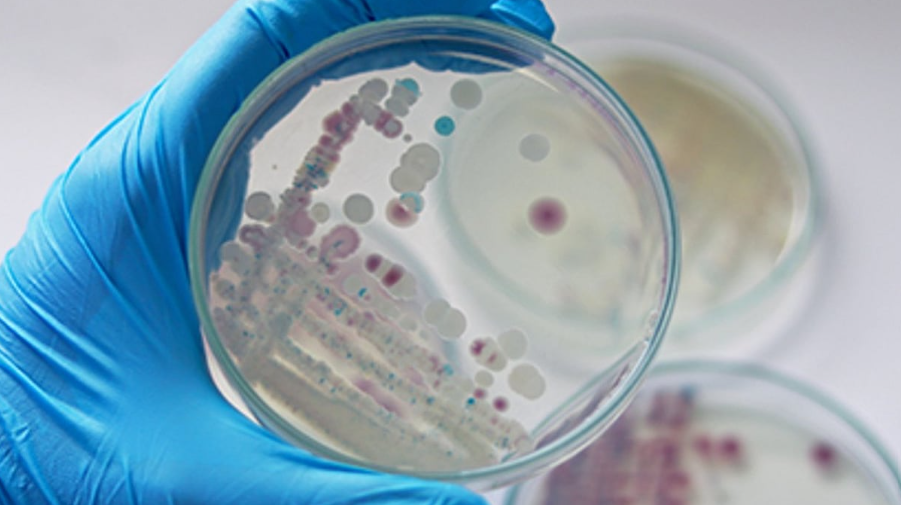
Methicillin-resistant Staphylococcus aureus, better known as MRSA, remains an important challenge for hospitals, laboratories and infection-control teams.
The difficulty is not simply identifying Staphylococcus aureus.
- Healthcare professionals may also need to determine whether the organism is methicillin-resistant or methicillin-sensitive, because antimicrobial resistance can influence treatment decisions and infection-control considerations.
MRSA is particularly relevant within healthcare facilities, where it can cause bloodstream infections, pneumonia, surgical-site infections and other serious disease. The CDC describes MRSA as a serious antimicrobial-resistance threat and notes that prevention efforts within healthcare facilities can reduce infections.
The challenge is also highly relevant across Africa.
A 2026 systematic review and meta-analysis found a pooled MRSA proportion of 42.2% among S. aureus isolates from patients with confirmed infections across Africa, although substantial regional differences were identified.
For laboratories and hospitals, this raises an important question:
How quickly can your existing diagnostic workflow distinguish methicillin-resistant from methicillin-sensitive S. aureus?
The Bosch Vivalytic MRSA/SA test uses qualitative real-time PCR and is designed to detect methicillin-resistant and methicillin-sensitive S. aureus, with results available in approximately 55 minutes.
What Is MRSA?

Staphylococcus aureus is a bacterium that can colonise people without necessarily causing illness.
However, it can also cause infections ranging from relatively localised skin and soft-tissue infections to serious invasive disease.
MRSA refers to strains of S. aureus that have developed resistance to methicillin and related beta-lactam antibiotics.
This resistance makes MRSA particularly important from both a clinical and antimicrobial stewardship perspective.
Within healthcare environments, MRSA can cause serious infections including bloodstream infections, pneumonia, surgical-site infections and sepsis.
But infection is only part of the issue.
People can also carry MRSA without displaying symptoms. This is known as colonisation.
That means laboratories and infection-control teams sometimes need to identify MRSA in people who do not appear ill.
Why is MRSA Important for African Healthcare Facilities?
Antimicrobial resistance is a global problem, but available evidence indicates that MRSA represents a significant challenge across African healthcare systems.
As mentioned earlier, A major 2026 meta-analysis examined 191 studies containing 40,979 S. aureus isolates from African patients with confirmed infections.
The researchers estimated that 42.2% of the S. aureus isolates were MRSA.
However, this should not be interpreted as meaning that 42.2% of all African patients, or even all S. aureus infections everywhere in Africa have MRSA.
There was substantial geographical variation. The pooled proportion was estimated at 56.2% in Northern Africa and 36.7% in Sub-Saharan Africa, while individual country estimates varied considerably.
This variation reinforces an important point for laboratory professionals:
Local microbiological surveillance is important.
African hospitals cannot necessarily assume that resistance patterns reported elsewhere accurately represent the organisms circulating within their own facilities.
MRSA Colonisation Can HappenWithout Symptoms
Another challenge is that MRSA does not necessarily make every carrier ill.
A person may be colonised with MRSA without developing an active infection.
This matters in hospitals because colonised patients and healthcare workers can potentially contribute to transmission.
A 2025 systematic review examining asymptomatic MRSA carriage across Africa analysed 69 studies involving 23,484 participants from 16 African countries.
The highest pooled colonisation estimates were reported among healthcare workers at 13.6% and hospitalised patients at 12.9%, compared with 4.1% among healthy community residents.
Again, these figures should not be treated as universal prevalence rates for every African healthcare facility.
Instead, they illustrate why MRSA surveillance and screening can become important in particular clinical environments and patient populations.
Why Rapid MRSA Identification Can Matter
When S. aureus is identified, one of the important laboratory questions may be whether the organism is methicillin-resistant or methicillin-sensitive.
Conventional microbiological methods remain important and can provide information that molecular detection alone cannot replace.
However, waiting for conventional culture and susceptibility workflows can take time.
Molecular diagnostic methods provide another option by detecting specific genetic targets associated with the organism and resistance.
This can be particularly valuable when the clinical or infection-control question requires information sooner.
The objective should therefore not be framed as:
PCR versus microbiology.
A more useful question is:
Where can rapid molecular testing complement the laboratory’s existing microbiological workflow?
MRSA vs MSSA

Not every Staphylococcus aureus strain is methicillin-resistant.
Methicillin-sensitive Staphylococcus aureus (MSSA) remains susceptible to antibiotics that MRSA can resist.
So, distinguishing between the two can therefore provide useful information.
- This is one of the central features of the Vivalytic MRSA/SA test.
Bosch states that the assay uses a single cartridge to detect and differentiate MRSA and MSSA DNA.
This means the test is not simply asking:
Is Staphylococcus aureus present?
It also helps distinguish between methicillin-resistant and methicillin-sensitive S. aureus.
For laboratories assessing rapid molecular diagnostics, that distinction is potentially more useful than pathogen detection alone.
How Does the Vivalytic MRSA/SA Test Work?

The Vivalytic MRSA/SA assay uses qualitative real-time PCR.
According to the Bosch Vivalytic portfolio, nasopharyngeal and oropharyngeal swabs can be used as sample material, with a sample volume of 600 μL per test.
Results are available in approximately 55 minutes.
| Specification | Vivalytic MRSA/SA |
|---|---|
| Detectable Pathogens | Methicillin-resistant / methicillin-sensitive Staphylococcus aureus |
| Detection Method | Qualitative real-time PCR |
| Sample Material | Nasopharyngeal swabs; oropharyngeal swabs |
| Time-to-Result | Approx. 55 minutes |
| Field of Application | Symptomatic and asymptomatic patients |
| Intended Setting | Professional and laboratory use |
| Sample Volume | 600 μL per test |
| Collection Technology | Cell capture |
| Transport Medium (1 ml) | Liquid Amies / eSwab® Collection and Transport System (Copan) |
Bosch positions the assay around rapid laboratory testing and outbreak containment, while also stating that the workflow requires no additional laboratory equipment.
Healthcare professionals can also review the manufacturer’s technical information directly through the official Bosch Vivalytic MRSA/SA test page.
What Could a Result in Approximately 55 Minutes Mean for a Hospital?
A shorter time-to-result should not automatically be equated with a better overall diagnostic programme.
The important consideration is what the healthcare team can do with the information.
Imagine, for example, that a hospital is investigating possible MRSA transmission.
The infection-control team may need to identify affected or colonised patients, evaluate possible transmission and decide which infection-prevention measures are appropriate.
Laboratory turnaround time becomes one component of that process.
- A molecular result available in approximately 55 minutes could potentially provide useful information earlier within the infection-control workflow.
But testing remains only one part of MRSA control.
Effective prevention can also involve hand hygiene, environmental cleaning, appropriate use of personal protective equipment, surveillance, patient-management procedures and antimicrobial stewardship.
Rapid diagnostics should therefore support an infection-control programme rather than be presented as a substitute for one.
Rapid PCR Does Not Eliminate the Need for Culture and Susceptibility Testing
This distinction is particularly important when discussing antimicrobial resistance.
The Vivalytic MRSA/SA test can distinguish MRSA from MSSA, but that does not mean a molecular result provides every piece of antimicrobial susceptibility information a laboratory may require.
Culture and antimicrobial susceptibility testing continue to have important roles.
A laboratory may therefore use rapid molecular testing to obtain earlier information while conventional microbiological methods provide additional characterisation.
For laboratory managers considering Vivalytic, the practical question becomes:
Where could a rapid MRSA/SA PCR result improve our existing workflow?
That is a much more meaningful evaluation than comparing technologies solely by turnaround time.
Could Vivalytic Help Laboratories Expand Molecular Testing Capacity?
The Vivalytic system is designed as a molecular diagnostic platform rather than an MRSA-only analyser.
Bosch describes the broader system as user-friendly and flexible, with immediate access to results and the ability to employ different detection methods, including real-time PCR and multiplex microarray technology.
For some African hospitals and laboratories, the investment question may therefore extend beyond MRSA.
Instead of asking:
“Do we perform enough MRSA tests to justify a molecular analyser?”
the organisation could consider:
“Which molecular testing requirements could this platform support across our facility?”
That leads to a considerably broader discussion.
One Vivalytic Platform, Multiple Infectious-Disease Applications
The current Vivalytic analyser covers tests associated with:
- Respiratory infections, including SARS-CoV-2, Influenza A/B, RSV and Bordetella;
- Gastrointestinal infections, including Clostridioides difficile, Norovirus and Rotavirus;
- Sexually transmitted infections, including multiplex STI testing;
- Nosocomial infections, including MRSA/SA and Candida auris; and
- Bacterial meningitis, including a multiplex PCR assay covering six bacterial pathogens.
This makes the platform particularly interesting from a laboratory-capacity perspective.
A hospital could potentially be evaluating MRSA today while also considering respiratory, gastrointestinal, STI or meningitis molecular testing requirements.
That is why the total potential utilisation of the platform may be more important than the expected volume of any single assay.
Questions to Consider Before Adopting Rapid MRSA PCR Testing
If your laboratory or hospital is evaluating MRSA molecular testing, useful questions include:
- What is our current MRSA testing volume?
- How frequently do we identify Staphylococcus aureus?
- What is our current turnaround time for differentiating MRSA from MSSA?
- Do we screen asymptomatic patients in particular circumstances?
- Which patient populations would potentially benefit from faster results?
- How would a rapid result change our existing infection-control workflow?
- What conventional culture and susceptibility testing would continue alongside PCR?
- Do we currently have molecular diagnostic infrastructure?
- What training would laboratory personnel require?
- How reliably can test cartridges and other consumables be supplied?
- What technical and after-sales support would be available locally?
- What other molecular assays could we run using the same platform?
These are exactly the types of questions that should be explored before procurement.
The best diagnostic platform is not necessarily the instrument with the longest specification sheet, but the one that fits the clinical requirements, laboratory workflow, testing volumes and resources of the healthcare organisation using it.
Is Your Laboratory Considering Rapid MRSA Testing?
If your hospital, laboratory, clinic or healthcare organisation is reviewing its MRSA testing, infection-control or wider molecular diagnostic capabilities, MediDiagAfrica can provide further information about the Bosch Vivalytic platform and Vivalytic MRSA/SA assay.
You can:
Request information about the Vivalytic MRSA/SA test
Request a Vivalytic demonstration
Discuss your laboratory’s molecular diagnostic requirements
Enquire about Vivalytic availability in your country
Specific product availability can differ between markets. Bosch advises healthcare organisations to confirm the availability of individual Vivalytic products within their region.
This article is intended for healthcare and laboratory professionals and provides general diagnostic and product information. It should not replace clinical guidelines, professional medical judgement, antimicrobial susceptibility testing, local infection-control policies or applicable regulatory requirements.