
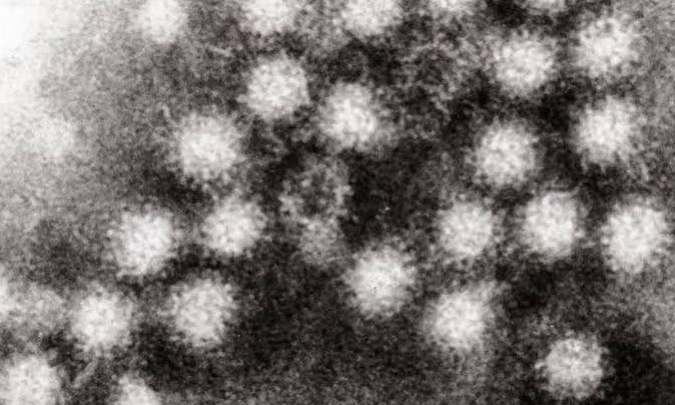
C. diff vs norovirus can be difficult to distinguish from symptoms alone because both can cause:
- Diarrhoea
- Abdominal discomfort and
- Outbreaks within healthcare environments.
However, they are very different infections – all with different risk factors, transmission patterns and clinical implications.
C. Diff vs Norovirus at a Glance
| Header | C. Difficile (C. diff) | Norovirus |
|---|---|---|
| Type | Bacterium | Virus |
| Common symptoms | Diarrhoea Abdominal pain/tenderness, Fever Nausea | Diarrhoea Vomiting Nausea Stomach pain |
| Important risk factor | Recent antibiotic exposure | Exposure to infected people Contaminated food, water or surfaces |
| Healthcare concern | Healthcare-associated infection, especially following antibiotic use | Highly contagious outbreaks in hospitals, care facilities and other shared environments |
| Molecular testing | PCR can detect toxin-producing C. diff targets | RT-PCR/RT-qPCR can detect norovirus RNA |
- The CDC’s clinical guidance on C. difficile identifies antibiotic exposure, previous C. diff infection, older age and recent stays in healthcare settings among important risk factors.
C. diff is also capable of forming spores that can contaminate surfaces and contribute to transmission.
Norovirus, by comparison, is a highly contagious virus that can spread through infected people, contaminated food or water and contaminated surfaces.
Its symptoms commonly include sudden vomiting and non-bloody diarrhoea, with most people recovering within 1-3 days.
Can PCR Differentiate C. Diff and Norovirus?
Yes.
Molecular testing can help identify the pathogen responsible for gastrointestinal illness.
- For Norovirus, the CDC identifies RT-qPCR as the preferred laboratory method, as it can detect viral RNA in specimens such as stool.
- C. diff requires a more careful interpretation. Molecular assays can detect toxigenic C. difficile, but a positive molecular result does not prove symptomatic infection by itself, because some people can carry C. diff without disease.
Testing therefore needs to be interpreted alongside symptoms and appropriate diagnostic protocols.
As you can surmise, this distinction is very important for laboratory and clinical teams investigating diarrhoeal illness where several pathogens could be responsible.
Testing C. Diff and Norovirus With Vivalytic

The Bosch Vivalytic molecular diagnostics platform provides dedicated real-time PCR assays for both pathogens.
The Vivalytic C. difficile test detects the tcdA and tcdB toxin genes, while the Vivalytic Norovirus test detects norovirus using a fully automated cartridge-based workflow.
For laboratories investigating gastrointestinal infections where the causative pathogen is uncertain, Bosch also offers the Vivalytic Noro-, Rotavirus, C. diff test.
This multiplex real-time PCR assay differentiates Norovirus, Rotavirus and C. difficile within a single test! If you’re interested in finding out how, kindly click the link above to learn more.
Considering Molecular Gastrointestinal Testing?
For healthcare facilities, the question is therefore not simply ‘C. diff vs norovirus’. It is how quickly and reliably the laboratory can determine what may be causing gastrointestinal illness and provide useful information to clinical and infection-control teams.
If your hospital or diagnostic laboratory is evaluating PCR testing for gastrointestinal infections, MediDiagAfrica can provide further information about the Vivalytic gastrointestinal assay portfolio, discuss your testing requirements, or arrange an enquiry about the Vivalytic platform.
Contact us Today to Find out More, or reach out to Valery Minkousse on Whatsapp.